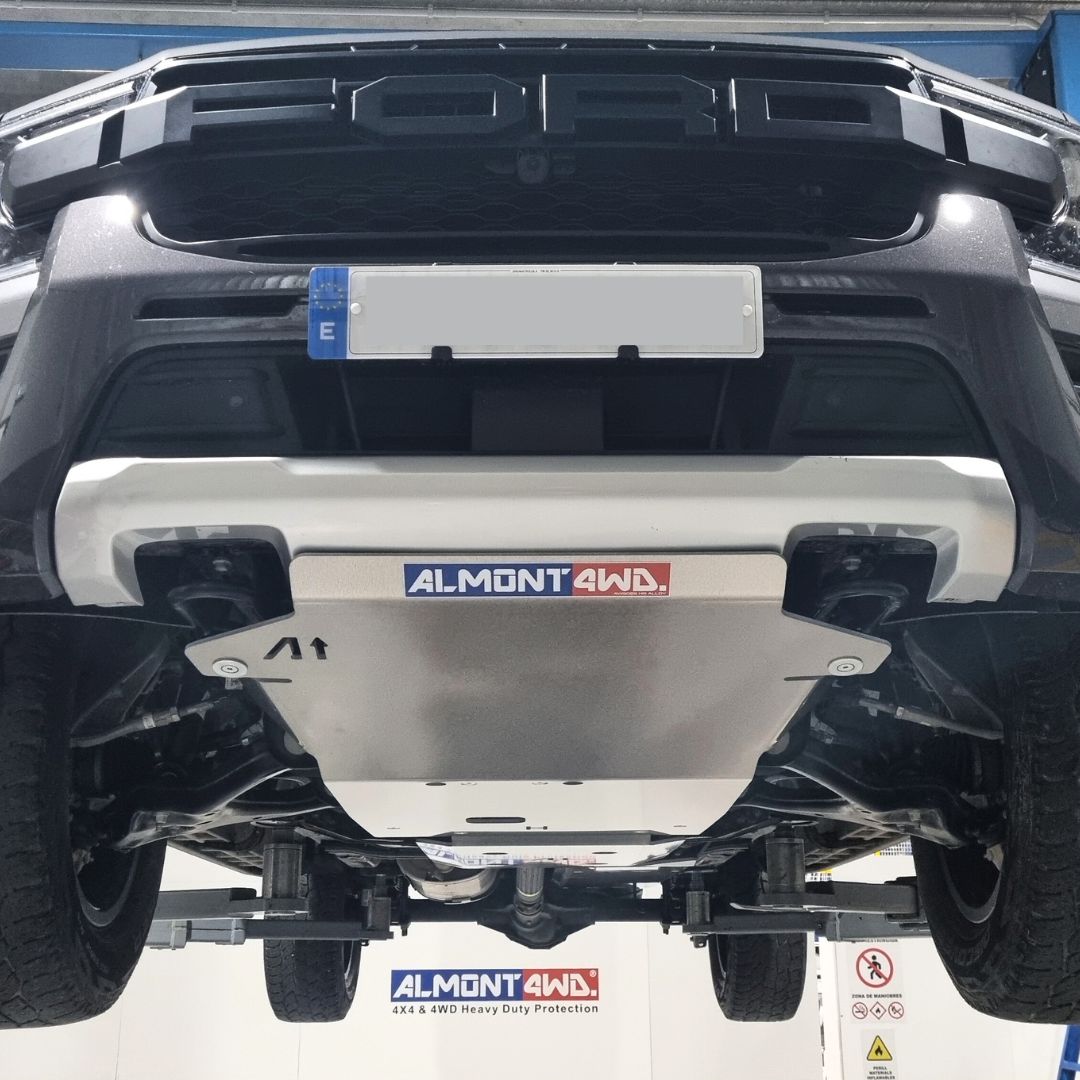
Aluminium VS Duralumin - Explications Skid Plate Inférieures
View the entire range of Skid Plate Lower Almont4wd
Aluminum and the Duralumin are two commonly used metallic materials, but they have significant differences in terms of composition, properties, and applications.
Aluminium :
Composition:
- Aluminum is a pure chemical element, symbolized by Al, and is found in the periodic table under atomic number 13.
Properties:
- Light: Aluminum is very light, with a density of about 2.7 g/cm³.
- Malleable: Easy to work and shape, it can be transformed into sheets, wires or complex shapes.
- Corrosion resistant: It naturally forms a protective oxide layer that prevents corrosion.
- Conductor of heat and electricity: It is a good thermal and electrical conductor, although less so than copper.
- Recyclable: Aluminum is 100% recyclable with no loss of quality.
Applications:
- Used in packaging (cans, aluminum foil), construction (windows, facades), transportation (car bodies, airplanes), and electronics (housing, radiators).
-------------------------------
Duralumin:
Composition:
- THE Duralumin is an aluminum alloy with mainly copper (about 4%), manganese (0.5 to 1%), magnesium (0.5 to 1%) and sometimes silicon.
Properties:
- More resistant: Thanks to the addition of copper and other elements, the Duralumin is much stronger than pure aluminum.
- Light: While being stronger, it remains relatively light, although slightly denser than pure aluminum.
- Good mechanical resistance: The addition of copper improves tensile strength and hardness.
- Corrosion: Less resistant to corrosion than pure aluminum due to the presence of copper, it often requires a protective coating.
- Heat treatability: Can be heat treated to further improve its mechanical properties.
- Mainly used in the aeronautical industry for aircraft structures (fuselages, wings) due to its excellent strength/weight ratio.
- Also used in sports equipment (bicycle frames, golf clubs), and some high-performance automotive parts.
Comparison of Materials:
| Property | Aluminum | Duralumin |
|---|---|---|
| Composition | To (pure) | Al, Cu, Mg, Mn, Si |
| Density | 2,7 g/cm³ | Environ 2,8-2,9 g/cm³ |
| Mechanical resistance | Moderate | High |
| Corrosion resistance | Very good | Less good |
| Heat treatability | Do not | Yes |
| Thermal conductivity | High | Moderate |
| Main applications | Packaging, construction, electronics | Aeronautics, sports equipment |
When you equip your 4x4 For off-road adventures, protecting the lower parts of the vehicle is essential. The materials commonly used for these... Skid Plate are aluminum and the DuraluminHere is an overview of the advantages and disadvantages of each to help you make the best choice.
Aluminum
Advantages:
- Lightness: With a density of only 2.7 g/cm³, aluminum doesn't add much weight to your vehicle, which can improve handling and fuel efficiency.
- Corrosion resistance: Aluminum forms a protective oxide layer, making it ideal for the wet and muddy conditions frequently encountered during off-road riding.
- Ease of work: Its malleability makes it easy to shape according to the specific needs of your vehicle.
Disadvantages:
- Moderate mechanical resistance: Pure aluminum can deform more easily under heavy impacts compared to stronger alloys.
Duralumin :
Advantages:
- Increased resistance: THE DuraluminAn aluminum alloy with copper, magnesium, and manganese offers significantly greater mechanical strength than pure aluminum. This translates to better protection against shocks and impacts during off-road driving.
- Optimal strength-to-weight ratio: Although slightly denser than pure aluminum, the Duralumin remains relatively lightweight while offering increased robustness.
Disadvantages:
- Less resistant to corrosion: Due to the presence of copper, the Duralumin is more likely to corrode without a protective treatment or coating.
- Cost: THE Duralumin may be more expensive than pure aluminum due to its composition and improved properties.
Conclusion :
Buy now Skid Plate Almont4wd which are all made in Duralumin therefore offering you the Skid Plate the most durable on the European market.
View the entire range of Skid Plate Lower Almont4wd